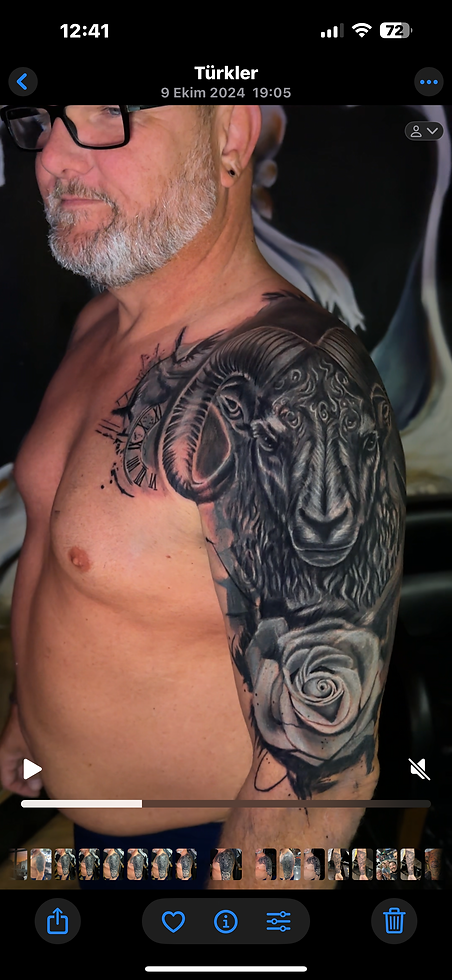
Cover-Up Tattoos in Antalya: Transforming Old Ink

A professional cover-up is not simply a bigger tattoo placed over an old one. Existing pigment, shape, density and position become part of the design problem. The new composition has to control what is already in the skin while creating a tattoo that looks intentional on its own.
How Does a Cover-Up Tattoo Work?
Old ink does not disappear when new ink is added. Instead, the new design uses stronger focal points, controlled shadows, textures and carefully positioned shapes to redirect attention. The artist needs to understand which parts of the old tattoo can be absorbed into shadows, which edges need to be broken up and where clean skin is available for highlights and detail.
Why Cover-Ups Often Need to Be Larger
Extra space around the original tattoo gives the new design room to breathe. If the new tattoo stays too close to the old outline, it can become a dark patch with no natural transition. Increasing the scale allows the main subject to sit outside the densest old pigment and creates more options for composition.
Does a Cover-Up Have to Be Very Dark?
Not always. However, dark existing pigment reduces the number of available choices. Light or faded tattoos offer more flexibility. Dense black areas often require strategic dark values in the new design, a larger composition or, in some cases, laser fading before the final cover-up.
Can Color Cover Black Ink?
Color cannot simply erase strong black pigment. Color may be part of a successful cover-up, but the composition still has to respect what is already present. The old tattoo's darkest areas usually determine where the new design needs its strongest shadows and structure.
When Laser Fading Can Help
Laser removal is not required for every cover-up. But reducing very dark or dense sections can give the tattoo artist more options and may allow a lighter, cleaner new composition. The decision depends on the old tattoo and the client's preferred result.
What Makes a Good Cover-Up Subject?
Subjects with natural texture, depth and tonal variation often offer useful design flexibility. Realistic animals, portraits, organic forms, architecture and some color-realism concepts can work well when they fit the existing tattoo. The subject should be chosen because it solves the old tattoo's structure, not simply because it is popular.
Can Part of the Old Tattoo Be Saved?
Yes, sometimes. If parts of the old tattoo are technically usable, they can be integrated into the new composition. A cover-up does not always mean hiding every millimeter; sometimes the best transformation combines selective reworking with new areas.
How to Photograph Your Tattoo for an Online Evaluation
Use natural or neutral light, avoid filters and send both a close-up and a wider image showing the entire body area. Include approximate measurements. A cropped photo of only the tattoo is often not enough because the artist also needs to see the free space around it.
For more background, read The Art of Cover-Up Tattoos and review selected transformations in the DaVinciHan portfolio.
Quick Cover-Up Answers
Can a black tattoo be covered?
Sometimes, but very dark and dense black areas significantly restrict the new design.
Will the new tattoo need to be bigger?
Often yes, because additional space gives the artist room to create clean focal points and transitions outside the old tattoo.
Do you need to see the old tattoo first?
Yes. Every cover-up should be evaluated individually because darkness, scar tissue, placement and available surrounding skin all affect the options.
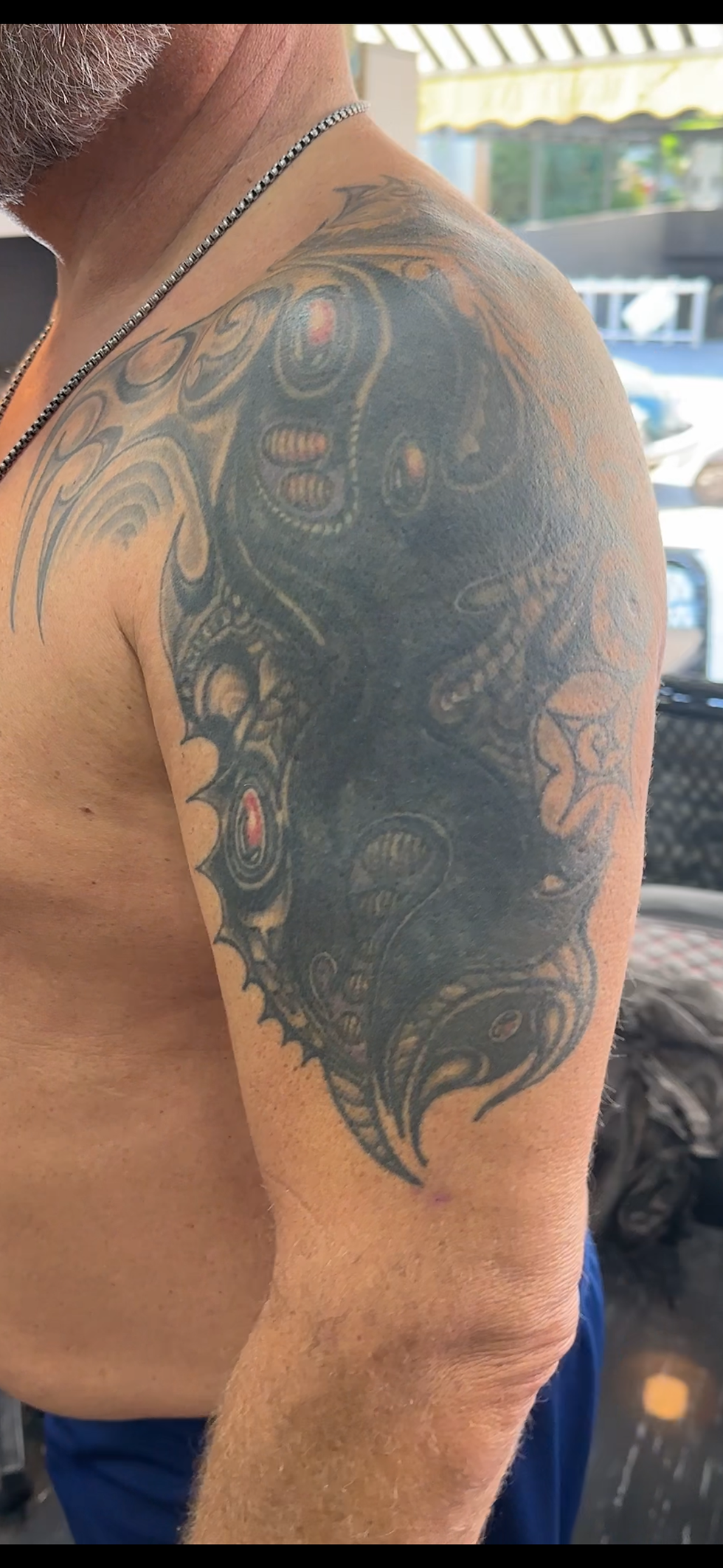
Cover-Up Case Study: Before and After
This real project shows why a cover-up must be planned as a new overall composition. The existing tattoo influences contrast, placement and the size of the new design.

Artist’s Perspective
With cover-ups, I never promise that every old tattoo can simply disappear under a new image. I first analyse the darkest areas, the direction of the old lines, available clean skin and where the new focal point can be placed. The new design must control the old tattoo instead of fighting it.
What I Check Before I Start
A good cover-up often uses more space than the original tattoo because space gives me options. It allows me to move the focal point, create cleaner transitions and avoid turning the entire area into one heavy dark block.
This guide reflects the way I approach real tattoo projects: body placement first, a clear focal point, controlled contrast, tattooable detail and honest technical limits. The goal is a design that works on skin, not just on a screen.


Comments